Live Squad History
Contents
- Meeting 2Pac (1991)
- The 2Pac Years (1991–1995)
- The Quad Studios Shooting (1994)
- Beyond 2Pac
- After Thug Life (1995)
- Dramacydal's Enterprise Project
- The Murder of Stretch
Introduction
Live Squad were a hip-hop group from Springfield, Queens, New York, best known for their close association with 2Pac during the early and mid-1990s. The group's classic lineup consisted of brothers Stretch (Randy Walker) and Majesty (Christopher Walker), together with K-Low (Kevin Rhames). Stretch and Majesty established themselves as respected rappers, producers and songwriters, while K-Low completed the group's best-known lineup following their earliest recordings.
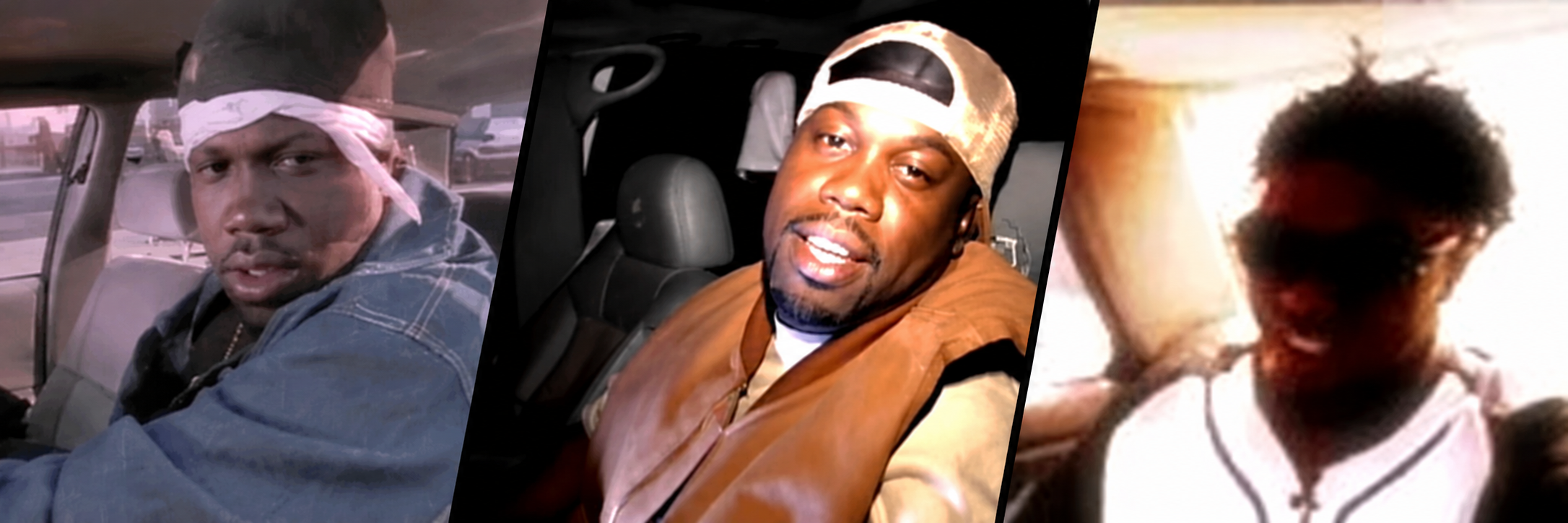
While K-Low is primarily remembered as a producer and songwriter, surviving studio recordings reveal that his contribution occasionally extended beyond production. The complete unedited version of Fake Gangster features a full verse from K-Low alongside Stretch and Majesty. It is currently the only known recording to showcase K-Low performing as an emcee, offering a rare glimpse into a side of his artistry that remained largely undocumented during Live Squad's recording career.
Although Live Squad are frequently remembered because of Stretch's friendship with 2Pac, their own recording career began several years before the two met. The group developed within New York City's thriving late-1980s hip-hop scene, building a reputation through local performances, demo recordings and independent releases before eventually signing with Tommy Boy Records.
Over the following decade Live Squad produced an extensive catalogue of official releases, promotional recordings and unreleased material. Stretch became one of 2Pac's closest friends and most trusted collaborators, contributing production, songwriting and vocals to numerous recordings, while Majesty continued to preserve the group's musical legacy following his brother's death.
Despite their influence, much of Live Squad's history has remained poorly documented. Many recordings were never officially released, several projects were abandoned, and production credits often appeared under publishing names rather than the individual members themselves. This archive exists to document that history as accurately as possible using surviving recordings, contemporary publications and original promotional material.
Origins (1988–1990)
The earliest documented history of Live Squad dates to the late 1980s in Springfield, Queens. During this period Stretch, then performing as Stretch Luv, and Majesty, performing under the name King C, began recording together while developing the energetic performance style that would later become synonymous with Live Squad.
The earliest known commercial recordings by the group appeared on the rare 1988 BQ In Full Effect EP. The release featured two Live Squad recordings, Troopin' It and We Ain't Havin' It, making it the earliest surviving commercial document of the group's history. Unlike later recordings, these performances feature Stretch alongside King C, who would later adopt the stage name Majesty.
An even more unusual piece of surviving documentation is a Sound Makers test pressing associated with the release. The test pressing is titled Nova Star Crew In Full Effect and credits Aaron Dee, Top Priority and Live Squad. The commercial release was subsequently issued as BQ In Full Effect. The test pressing provides a rare physical document of the early release history and shows Live Squad appearing alongside other emerging New York artists at the very beginning of their recording career.
The EP also provides the only known contemporary references to an individual named DJ Shalik. During the introduction to Troopin' It, Majesty proclaims, "Shalik, Stretch Luv and King C too," while the closing shout-outs on We Ain't Havin' It include the dedication "my DJ Shalik." Although little else is currently known about him, these references strongly suggest that DJ Shalik was closely associated with the earliest incarnation of Live Squad before the group evolved into the better-known trio of Stretch, Majesty and K-Low.
Musically, these early recordings differ considerably from the darker style for which Live Squad later became known. Influenced by the golden age of late-1980s hip-hop, both songs feature upbeat drum programming, energetic call-and-response routines and straightforward lyrical performances. Nevertheless, the chemistry between Stretch and Majesty is already clearly evident, foreshadowing the production and vocal partnership that would define the group throughout the following decade.
Little documentation survives from this period, but the BQ In Full Effect EP confirms that Live Squad were recording commercially several years before their association with Tommy Boy Records and 2Pac. As additional promotional material and recordings continue to surface, the group's formative years are gradually becoming better understood, revealing a much longer and richer history than was previously recognised.
Tommy Boy Records (1991–1993)
By the early 1990s Live Squad had developed considerably from the group heard on BQ In Full Effect. King C had adopted the stage name Majesty, K-Low had become part of the lineup, and Stretch was rapidly earning a reputation as both an emcee and producer within New York's hip-hop community. Their growing reputation eventually attracted the attention of Tommy Boy Records, one of the most influential independent hip-hop labels of the era.
According to several accounts, Stretch's friendship with Ed Lover helped introduce Live Squad to Tommy Boy. The signing represented the group's first major recording contract and gave them the opportunity to develop a full commercial project while continuing to refine their distinctive production style. By this stage the energetic sound of the late-1980s recordings had given way to darker beats, harder lyrical themes and increasingly cinematic storytelling.
Live Squad made their Tommy Boy debut in 1992 with the Murderahh! / Heartless 12-inch single. The release introduced many listeners to Stretch, Majesty and K-Low for the first time and remains one of the most important records in the group's catalogue. While Murderahh! showcased the group's aggressive lyrical style, Heartless demonstrated the sophisticated sample-based production that would later become closely associated with Stretch's work alongside 2Pac.
One of the most significant discoveries relating to this period appeared in the 18 July 1992 edition of Billboard magazine. Its Studio Action / Audio Track column reported that Live Squad were in New York mixing Heartless, providing one of the only known contemporary accounts of the group's recording sessions. The article confirms that the single was nearing completion during the summer of 1992 and offers a rare glimpse into Live Squad's activities while they were still signed to Tommy Boy.
Promotion continued throughout the second half of 1992. During an appearance on New York's legendary Raw Deal radio programme, Live Squad and Tommy Boy representative Jamieson Gallo premiered a new remix of Heartless, demonstrating the label's continuing commitment to the group. These broadcasts helped establish Live Squad within New York's underground hip-hop community while introducing listeners to their increasingly polished production.
At the same time, Live Squad were recording material intended for their debut album, commonly referred to as Game Of Survival. Rather than following the traditional album format, the group produced a short film that combined dramatic scenes with music videos for the project's songs. The mini-movie reflected the increasingly cinematic direction of Live Squad's writing, with violent street narratives and social commentary replacing the lighter party themes of their earliest recordings.
Although the Game Of Survival soundtrack was never commercially released, the surviving film provides an invaluable record of the group's creative ambitions during the Tommy Boy years.
Despite the quality of the material, Live Squad's relationship with Tommy Boy ultimately came to an end before their debut album could be completed. Although disappointing at the time, the group's departure proved to be a turning point. Stretch had already begun working closely with a young rapper named 2Pac, a collaboration that would fundamentally change both his career and the future legacy of Live Squad.
Meeting 2Pac (1991)
Live Squad's history changed dramatically during the early 1990s through their friendship with Digital Underground. Stretch and Majesty became acquainted with members of the group while performing throughout New York, and it was through Shock G that Stretch was eventually introduced to a young Tupac Shakur during 1991.
The friendship developed almost immediately. Both artists shared similar musical influences and quickly discovered a mutual respect for each other's writing and production. Before long, Stretch and 2Pac were spending considerable amounts of time together both inside and outside the recording studio, laying the foundations for one of hip-hop's closest creative partnerships.
Stretch's earliest known appearance alongside 2Pac came on Family Of The Underground, recorded with Digital Underground for the 1991 album Sons Of The P. Although only one collaboration, the recording marked the beginning of a working relationship that would produce dozens of officially released and unreleased recordings over the next four years.
The 2Pac Years (1991–1995)
Between 1991 and 1995 Stretch became one of 2Pac's closest friends, collaborators and most trusted producers. Their relationship extended far beyond occasional guest appearances. Stretch regularly contributed production, songwriting, background vocals and guest verses, while Majesty also became an important creative contributor during many of the sessions.
Although Live Squad are often remembered simply as one of several groups associated with 2Pac, surviving recordings reveal a far deeper level of involvement. Stretch's production and appearances can be heard across many original 2Pac recordings.
During this period Stretch worked on material recorded for Strictly 4 My N.I.G.G.A.Z., Thug Life: Volume 1, the unreleased Troublesome 21 sessions, the original R U Still Down recordings, and numerous songs that remained unreleased until many years after 2Pac's death.
Research over recent years has revealed that Stretch's involvement extended far beyond the handful of songs officially credited to him. Original versions of recordings such as Late Night, Judgement Day, The Uppercut, Nothing 2 Lose, Is It Cool 2 Fuck?, Hennessey, Hellrazor, Bury Me A G, Life's So Hard On A G, Stay True and Under Pressure demonstrate the extent of Live Squad's creative influence before many of the songs were later remixed, re-recorded or commercially reissued.
Several of these recordings survive today only in their original form through collector circles, while others were substantially altered for posthumous albums. In many cases Stretch's production was replaced, his verses removed, or his songwriting contributions went uncredited outside the original studio sessions.
The partnership reached its peak during the recording of Thug Life: Volume 1. Stretch, Majesty and K-Low became regular figures within the extended Thug Life camp, contributing both musically and personally to one of the most productive periods of 2Pac's career.
The relationship between Live Squad and Thug Life extended beyond the studio. Stretch regularly appeared alongside 2Pac during live performances, television appearances and promotional events, becoming one of the most recognisable figures within 2Pac's inner circle between 1992 and 1994.
Evidence uncovered through original promotional cassettes, recording documentation and surviving session material continues to reveal just how many songs originated from collaborations between 2Pac and Live Squad before being reworked for later commercial releases. As more material continues to surface, it has become increasingly clear that Stretch's contribution to 2Pac's catalogue was considerably greater than is reflected by the official album credits alone.
The Quad Studios Shooting (1994)
Few events changed the course of Live Squad's history as dramatically as the shooting of 2Pac at Quad Recording Studios in Manhattan on 30 November 1994. The incident marked a turning point in 2Pac's life and career, as well as his relationship with Stretch and the wider New York hip-hop community.
The events immediately preceding the shooting are particularly significant. During the night of 29–30 November, 2Pac and Stretch were recording together, including the Ron G-associated recording later known as The Heat. The recording places the two together immediately before the events at Quad and is an important part of the chronology surrounding the shooting.
Shortly afterwards, 2Pac travelled to Quad Recording Studios to record a guest appearance for rapper Little Shawn, with Stretch accompanying him. At approximately 12:20–12:30 a.m., as 2Pac and his companions entered the building, three armed men approached them. 2Pac was robbed, beaten and shot five times before being taken to Bellevue Hospital.
The circumstances surrounding the attack would become one of the most controversial subjects in hip-hop history. Although the incident was initially treated as an armed robbery, 2Pac increasingly believed that the shooting had been more than a random robbery. His suspicions would profoundly affect his relationships with people he had previously trusted.
For Stretch, the incident was particularly significant because he had been with 2Pac immediately before and during the events at Quad. Stretch had been one of 2Pac's closest friends and collaborators for several years, and their relationship had produced a substantial body of music. After the shooting, however, that relationship began to deteriorate.
2Pac underwent emergency treatment but left hospital against medical advice. The following day, 1 December 1994, he appeared in Manhattan Supreme Court in a wheelchair while still recovering from his injuries, as his sexual-abuse trial reached its verdict.
The Quad shooting became a dividing line in 2Pac's life and in the history of Live Squad. Before it, Stretch and 2Pac had developed one of hip-hop's closest creative partnerships. Afterwards, suspicion and mistrust increasingly replaced that relationship, contributing to the eventual separation of the two former friends.
The wider consequences extended far beyond Live Squad. The shooting became one of the foundations for 2Pac's increasingly hostile relationship with sections of the New York hip-hop community and ultimately formed part of the much larger East Coast–West Coast conflict.
For Live Squad, the significance of Quad cannot be overstated. The events of 30 November 1994 changed the lives and relationships of everyone involved, and ultimately set the course for the final chapter of Stretch's life.
Beyond 2Pac
Although Stretch's work with 2Pac became the defining chapter of his career, he remained an active producer for numerous other artists throughout the mid-1990s. His distinctive production style attracted the attention of some of hip-hop's most respected performers and demonstrated that his reputation extended well beyond the Thug Life camp.
Among Stretch's most notable productions are Take It In Blood and Silent Murder, recorded by Nas during the sessions for It Was Written. His production work also extended to artists such as Freddy Foxxx, Rhythm-N-Bass and numerous underground New York performers, further establishing his reputation as both an accomplished producer and songwriter.
Despite these achievements, Stretch rarely sought recognition for his work. Much of his contribution remained behind the scenes, either through shared production credits or under publishing entities such as Grand Imperial Thug Music, making it difficult for later listeners to fully appreciate the breadth of his influence.
After Thug Life (1995)
By 1995 the close relationship between 2Pac and Stretch had begun to deteriorate. Following the Quad Studios shooting in November 1994 and 2Pac's subsequent imprisonment, tensions gradually developed between the two former friends. Although the precise reasons remain the subject of debate, 2Pac became increasingly suspicious of several people within his New York circle, including Stretch.
Dramacydal's Enterprise Project
Following the release of Thug Life: Volume 1, Dramacydal began work on a new standalone project that is now believed to have carried the working title Enterprise Reference. Although never commercially released, the surviving promotional cassette provides one of the most important surviving documents from the post-Thug Life period.
Unlike the later Dramacyde project, Enterprise Reference features production almost exclusively by Stretch.
Several recordings from Enterprise Reference would later reappear on the revised Dramacyde sequence. However, comparison of the two projects reveals that many of Stretch's productions were subsequently replaced or remixed by producers including Moe ZMD, Mike Mosley and Soulshock & Karlin.
Neither Enterprise Reference nor Dramacyde received an official commercial release, yet together they provide an invaluable insight into one of the least documented periods in the history of the extended Thug Life family.
The Murder of Stretch
During the early hours of 30 November 1995, exactly one year after the Quad Studios shooting involving 2Pac, Stretch was murdered in Queens, New York. The night had begun with a recording session with Nas, with Stretch working on material that would later appear on It Was Written (1996), including “Take It in Blood” and “Silent Murder”.
Nas later revisited the night in “A Queens Story”, from his 2012 album Life Is Good. Reflecting on his final encounter with Stretch, Nas describes how he had left
Stretch's vehicle shortly before the fatal shooting reflecting on how he could have died that same night. Nas specifically recalls Stretch driving towards Springfield
after dropping him off.
The song provides a personal account of Nas's last encounter with Stretch, preserving his recollection of the night and the shock of losing his friend.
“Fucking with Stretch from Live Squad, I could've died the same night that Stretch died. I just got out of his ride.
He dropped me off and drove to Springfield. November thirtieth, another Queens king killed”
— Nas, “A Queens Story” (Life Is Good, 2012)
Stretch subsequently dropped off his brother and Live Squad partner, Majesty, at his home in Queens Village. According to published accounts, Stretch was heading towards an event involving The Notorious B.I.G. when a vehicle carrying several men began pursuing his green minivan. Gunmen opened fire as the vehicles moved through Queens.
Stretch crashed near 112th Avenue and 209th Street, striking a parked vehicle and a tree before his minivan overturned. He suffered fatal gunshot wounds to his back. He was just twenty-seven years old.
The Investigation
For years, the circumstances surrounding Stretch's murder remained shrouded in speculation. The date, exactly one year after the Quad Studios shooting, encouraged theories that his death was connected to the events involving 2Pac. However, no confirmed evidence has established such a connection.
A significant development emerged through a separate federal investigation into the murder of Run-DMC's Jam Master Jay. In 2007, federal prosecutors publicly identified Ronald “Tinard” Washington as a suspect in Stretch's killing. According to prosecutors, Washington and two other men allegedly pursued Stretch's vehicle and opened fire.
The alleged motive was a case of mistaken identity. Prosecutors contended that Washington believed he was shooting at Majesty, whose association with the Young Guns gang placed him in conflict with the rival Hollis Juniors Crew. Stretch was reportedly killed instead of his brother.
In subsequent court filings reported publicly in 2022, prosecutors said they had three witnesses who could identify Washington as the shooter. They also alleged that another individual had been in the vehicle during the attack. Washington was never charged with Stretch's murder, however, and the case remains officially unsolved. Washington denied involvement in the killing.
The investigation also brought renewed attention to the circumstances surrounding Jam Master Jay's death in 2002, for which Washington was later prosecuted alongside Karl “Little D” Jordan Jr. Those proceedings were separate from the investigation into Stretch's murder.
An Unfinished Legacy
Stretch's death abruptly ended one of Queens' most promising hip-hop production careers. His final work with Nas would reach the public the following year, while other recordings and collaborations, including material associated with 2Pac, would emerge posthumously over time.
More than three decades later, the identity of Stretch's killer has never been established through a criminal conviction. His murder remains one of the most tragic and unresolved chapters in Live Squad's history.
Grand Imperial Records
Following Stretch's death, Majesty continued working to preserve both his brother's legacy and Live Squad's music. Grand Imperial Records became an important home for these later projects, while also developing into an independent label for new artists and recordings connected to Majesty's wider Queens network.
One of the label's most significant releases was the expanded Game Of Survival DVD and soundtrack in 2001. The release revisited the earlier Live Squad project that had been developed during the Tommy Boy period, combining the original 1993 film with music and previously unavailable recordings. Among the material preserved on the accompanying CD was Daddy Bigtimers.
Majesty also continued recording and producing music while making previously unheard Live Squad material available to fans. Grand Imperial therefore served two connected purposes: preserving Stretch and Live Squad's catalogue while also providing a platform for new independent projects.
E-Moneybags
E-Moneybags, born Eric Smith, was a Brooklyn-born, Queens-raised rapper who became closely connected to the same New York hip-hop circle surrounding Stretch, Majesty, 2Pac and Live Squad. Born in Brooklyn's Sumner Projects, he later moved to Lefrak City, Queens, where he became part of the Queens street and hip-hop environment that would shape much of his later life. He was also a first cousin of Homicide, and developed close relationships with a number of prominent New York rappers.
E-Moneybags' connection to Live Squad went considerably deeper than his later work with Grand Imperial Records. He was reportedly very close with Stretch, Majesty and the wider Live Squad circle, as well as with 2Pac. His relationships also extended into other important New York circles, including Prodigy of Mobb Deep, Noreaga and Nas. These connections placed E-Moneybags at the centre of a network that linked Live Squad and 2Pac with some of the most important artists in New York hip-hop during the 1990s.
Before concentrating on music, E-Moneybags had a reputation as a street figure. Accounts of his early life describe his involvement in drug dealing, extortion and other criminal activity. One particularly serious incident attributed to him occurred in 1990, when a confrontation between rival groups at a movie theatre reportedly resulted in the death of a 15-year-old boy. According to the account, the incident was subsequently connected with the introduction of metal detectors at the theatre. These details form part of the accounts surrounding E-Moneybags' early life and should be distinguished from the later documented record of his music career.
E-Moneybags eventually turned his attention towards rap, seeing music as an alternative way of making money. He famously described the transition in terms of a "stickup without a gun" — taking the confidence, connections and experience he had developed on the streets and applying them to the music business. His existing relationships with New York rappers gave him access to a wide network of artists, producers and industry figures, allowing him to establish himself within the city's underground rap scene.
His relationship with 2Pac was particularly significant. E-Moneybags remained connected to Pac during the turbulent period following the Quad Studios shooting in November 1994 and Pac's subsequent imprisonment. He was one of the people from Pac's New York circle who maintained contact with him during this period.
Accounts differ over the circumstances surrounding attempts to visit 2Pac in prison. Majesty later recalled that he and Stretch attempted to visit Pac but were unable to obtain visitation because they did not have the required identification. Other accounts state that E-Moneybags was able to visit Pac while he was incarcerated. The differing recollections are important when reconstructing this period, but they establish how closely E-Moneybags was connected to Pac's New York circle at a time when relationships between Pac and some of his former friends were becoming increasingly strained.
E-Moneybags' relationships extended across several overlapping factions of the New York rap scene. He was particularly close with Prodigy, while also maintaining connections with Nas, Noreaga and The Notorious B.I.G.. His association with these artists demonstrates that his position within the scene was much broader than the relatively small number of commercially released records bearing his name might suggest.
One of the clearest surviving pieces of visual evidence of E-Moneybags' standing within New York hip-hop comes from footage filmed on the set of Jay-Z's "Dead Presidents" video. The footage shows E-Moneybags with The Notorious B.I.G. and D-Roc, with Biggie directly acknowledging E-Moneybags to the camera and referring to him as an underground figure. The footage provides a rare contemporary record of E-Moneybags alongside some of the leading figures in New York hip-hop during this period.
As E-Moneybags moved further into music, his involvement became increasingly organised around his own recording career and independent business interests. He eventually became closely associated with Majesty and became a co-owner of Grand Imperial Records. The label brought together E-Moneybags' Queens connections with the existing Live Squad network and gave him a platform for his own recordings as well as a role in the wider independent operation surrounding Majesty.
In 1999, Grand Imperial Records released E-Moneybags' first and only major project, In E-Moneybags We Trust. The album featured an extensive collection of New York artists and included the Live Squad collaboration "What You Need". Other guests included Nas, Noreaga, Kool G Rap, Nature, Capone and Show Boyz. The album provides one of the clearest surviving records of E-Moneybags' own musical career and the network surrounding Grand Imperial Records.
E-Moneybags' connection to Live Squad and 2Pac continued after the release of his album. He appeared on "Big Time (Remix)", a collaboration featuring E-Moneybags, 2Pac and Live Squad. The track was subsequently issued alongside a remixed version of "Regulate", featuring Majesty and Prodigy. The two tracks were released together as the Regulate / Big Time single in 2001, after E-Moneybags' death.
E-Moneybags was also involved in various disputes and controversies during his short recording career. His use of the Money Bags name became the subject of a public dispute with H-Money Bags and Roc-A-Fella Records, while his associations with Prodigy and other Queens artists placed him within a network where music, street relationships and personal conflicts frequently overlapped. His life during this period reflected the turbulent environment in which much of New York's hardcore hip-hop developed during the 1990s.
E-Moneybags' career was ultimately cut short when he was shot and killed in Queens on 16 July 2001. Accounts of his death have linked the murder to the killing of Colbert "Black Just" Johnson, a member of the Supreme Team, with allegations that the killing of E-Moneybags was ordered as retaliation. These circumstances were subsequently examined in the federal case involving Kenneth "Supreme" McGriff. The precise events surrounding E-Moneybags' death remain part of the wider and often conflicting history surrounding the Queens street and hip-hop scene of the period.
E-Moneybags' life and career therefore form an important but often overlooked part of Live Squad's wider history. Although his recording career lasted only a few years, his connections reached from Stretch, Majesty and 2Pac to Biggie, Nas, Noreaga and Prodigy, while his role in Grand Imperial Records connected those relationships to the independent music business that developed around Live Squad after Stretch's death. The surviving recordings, interviews and video footage reveal a figure who was involved in far more of the New York hip-hop network than his relatively small discography alone would suggest.
The Tribute (2010)
In 2010, Majesty released The Tribute – The Forgotten Chapter In Hip Hop, a project documenting the history and legacy of Live Squad, Stretch, Majesty and the people surrounding the group. The release combined an album with a documentary, making it both an audio collection and a visual record of the group's history.
The documentary looked back at Live Squad's story from Majesty's perspective as one of the surviving members of the group. It explored the group's history, their work with 2Pac and the wider New York hip-hop scene, bringing together stories and archival material connected to the people and music surrounding Live Squad.
The album was not simply a reissue of the original Live Squad recordings. Previously recorded Live Squad tracks were revisited for the project, with new Majesty verses recorded for the older material. The original recordings therefore formed the foundation of the project while the newly recorded verses gave the tracks a different context for the 2010 release.
This approach made The Tribute a distinctive later chapter in the Live Squad catalogue. Rather than presenting the group's earlier recordings purely as archival material, Majesty combined the original Live Squad music with new performances while the accompanying documentary provided additional context for the history behind the recordings.
The project helped preserve and present material from a period of Live Squad's history that had remained largely undocumented in commercial releases. By bringing together the original music, new Majesty performances and a documentary about the group's history, The Tribute became an important part of the later Live Squad catalogue.
Live Squad's Legacy
Although Live Squad never achieved the commercial success enjoyed by many of their contemporaries, their influence on East Coast hip-hop during the early 1990s was far greater than is often recognised. Stretch developed into one of the most respected underground producers of his generation, while Majesty continued to preserve and expand the group's legacy long after his brother's death.
Research into original studio recordings has revealed that Stretch's contribution to 2Pac's catalogue extended well beyond the handful of songs officially credited to him. Numerous original recordings, alternate versions, unreleased productions and songwriting contributions demonstrate that Live Squad were deeply involved in shaping many of the recordings now regarded as classics within 2Pac's catalogue.
Beyond 2Pac, Stretch's production work for artists including Nas, Digital Underground, Freddy Foxxx and numerous underground performers demonstrated his versatility as both a producer and songwriter. Meanwhile Majesty continued recording, producing and releasing music through Grand Imperial Records, ensuring that Live Squad's music remained available to future generations.
Grand Imperial continued to preserve Stretch's catalogue through later compilations. The Best Of Stretch Vol. 1 was released on Grand Imperial Records in 2003, bringing together rare Stretch and Live Squad productions involving artists including 2Pac, Nas, The Notorious B.I.G., Apache, Treach, Buju Banton and Dramacydal. A second Grand Imperial CDr, The Best Of Stretch Vol. 2, followed in 2018 with additional rare and unreleased material, including original and previously unreleased Live Squad and 2Pac recordings.
Many questions surrounding the group's history remain unanswered. Numerous songs survive only on promotional cassettes, studio reference tapes or among private collectors, while several planned albums—including Game Of Survival, Enterprise Reference, Dramacyde and Diary Of A Poor Man— were never officially released. As additional recordings and documentation continue to emerge, our understanding of Live Squad's history continues to grow.
Today, Live Squad are increasingly recognised not simply as associates of 2Pac, but as talented artists, producers and songwriters whose influence extended throughout one of the most important periods in hip-hop history. Their catalogue remains one of the richest collections of unreleased material from the era, while Stretch's production style continues to be appreciated by fans and collectors more than three decades after many of the recordings were created.
This archive exists to preserve that history. By documenting original recordings, promotional releases, unreleased projects, contemporary magazine articles and newly discovered material, it aims to provide the most complete historical record of Live Squad currently available and to ensure that the contributions of Stretch, Majesty, K-Low and the wider Live Squad family are not forgotten.
Timeline
| Year | Event |
|---|---|
| 1988 | Live Squad's earliest known recordings, Troopin' It and We Ain't Havin' It, appear on the rare BQ In Full Effect EP. |
| 1991 | Stretch meets 2Pac through Digital Underground. Records Family Of The Underground. |
| 1992 | Signs with Tommy Boy Records and releases Murderahh! / Heartless. |
| 1993 | Completes the Game Of Survival film project and records extensively with 2Pac. |
| 1994 | Contributes to Thug Life: Volume 1 and numerous unreleased recordings with 2Pac. |
| 29 Nov 1994 | Stretch and 2Pac record their final song together called "The Heat" with Ron G in New York. |
| 30 Nov 1994 | Stretch accompanies 2Pac during the Quad Studios shooting in New York. |
| 1994–1995 | Dramacydal begins work on the Enterprise Reference project. |
| 29 Nov 1995 | Stretch produces recordings for Nas including Take It In Blood and Silent Murder. |
| 30 Nov 1995 | Stretch is murdered in Queens, New York. |
| 1995–1996 | The Enterprise Reference sessions evolve into the revised Dramacyde project. |
| 24 Nov 1998 | Stretch appears posthumously on 2Pac's Greatest Hits album through God Bless The Dead. |
| 1999 | Grand Imperial Records releases E-Moneybags' In E-Moneybags We Trust, including What You Need with Live Squad. |
| 2001 | Grand Imperial Records releases the expanded Game Of Survival DVD and soundtrack. |
| 2001 | E-Moneybags, 2Pac and Live Squad appear together on Big Time, released with Regulate featuring Majesty and Prodigy. |
| 16 July 2001 | E-Moneybags is murdered in Queens, ending his recording career. |
| 2003 | Grand Imperial Records releases The Best Of Stretch Vol. 1, preserving rare Stretch and Live Squad productions. |
| 2004 | Majesty produces The Reason for Smif-N-Wessun and receives writing credits on numerous tracks from Loyal To The Game. |
| 2010 | Majesty releases The Tribute – The Forgotten Chapter In Hip Hop, combining a Live Squad tribute album with a documentary. Previously recorded Live Squad tracks are revisited with new Majesty verses. |
| 2018 | Grand Imperial Records releases The Best Of Stretch Vol. 2, containing additional rare and unreleased material. |
| Present | Previously unknown recordings, promotional cassettes and studio documentation continue to emerge, expanding our understanding of Live Squad's history. |